
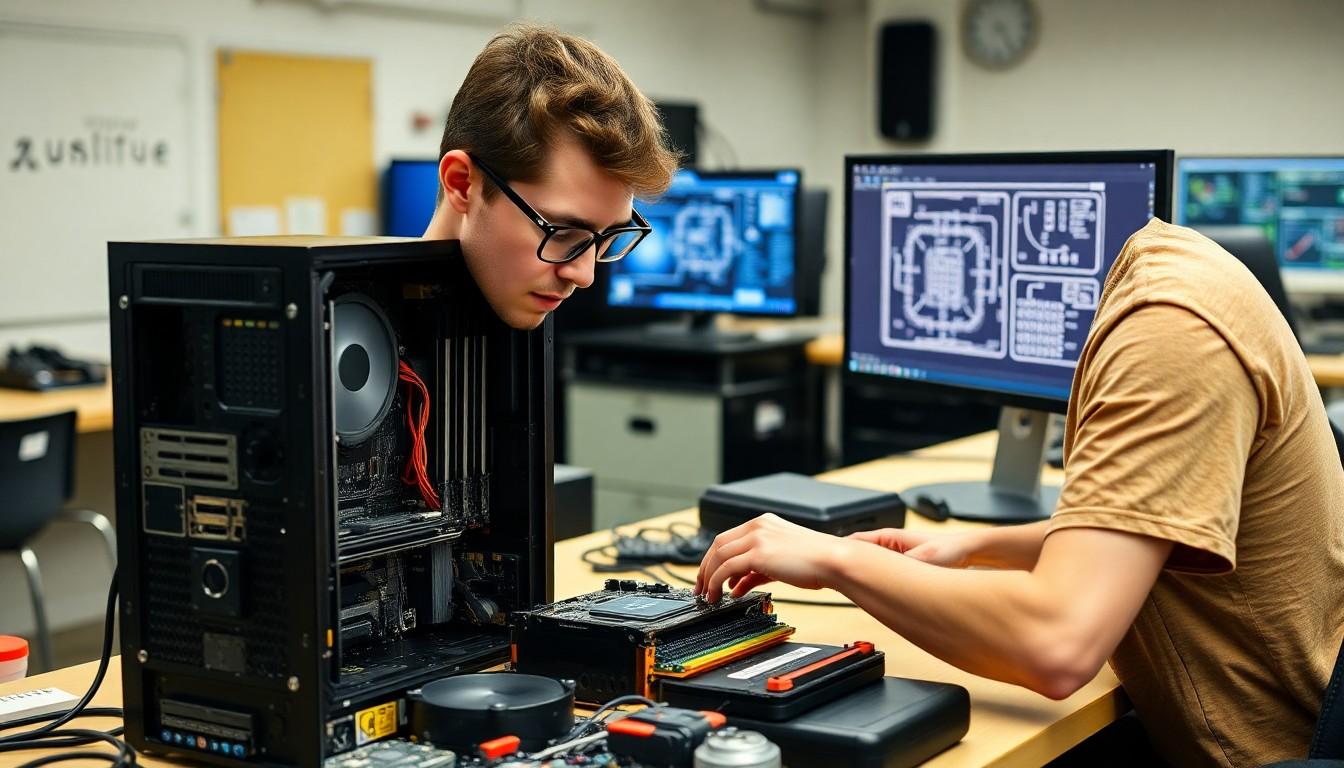
In a world where computers run everything from your morning coffee maker to rocket ships, understanding computer hardware is like having a superpower. Imagine being the go-to tech guru among friends, effortlessly fixing their devices while they marvel at your wizardry. Computer hardware courses offer just that—a chance to dive deep into the nuts and bolts of technology, turning confusion into confidence.
Overview of Computer Hardware Courses
Computer hardware courses provide essential knowledge for anyone interested in technology. These courses cover topics such as computer architecture, components, and systems. Students learn about CPUs, motherboards, memory, and storage devices.
Typically, courses include both theoretical and practical learning. Hands-on labs allow students to build and troubleshoot computers. Understanding how each component interacts enhances software performance.
Many computer hardware courses also offer insights into emerging technologies. This includes cloud computing and IoT applications. Grasping these innovations helps individuals stay relevant in a rapidly changing tech landscape.
Certification programs are available for those seeking formal qualifications. Organizations like CompTIA and Cisco offer certifications recognized in the industry. Earning such certifications can improve job prospects and lead to higher salaries.
Flexible learning options cater to varying schedules and preferences. Online courses enable self-paced learning, while in-person classes foster direct interaction with instructors. Many educational institutions partner with tech companies to provide students with real-world experience.
Individuals interested in a career in IT often find these courses invaluable. Knowledge of computer hardware enhances skills in networking, cybersecurity, and systems administration. Building a solid foundation in hardware prepares students for advanced studies in technology.
Understanding computer hardware paves the way for innovation and problem-solving. A strong grasp of this area empowers individuals to contribute effectively in tech-focused roles. Ultimately, computer hardware courses equip learners with the expertise needed in today’s tech-driven economy.
Types of Computer Hardware Courses

Understanding the different types of computer hardware courses helps individuals choose the right path for their learning goals. These courses typically fall into two categories: online courses and in-person courses.
Online Courses
Online courses provide flexibility, allowing learners to study at their own pace. Many platforms offer comprehensive content, covering fundamentals to advanced topics. Students can access structured videos, quizzes, and simulations, enhancing their grasp of complex concepts. Participants often benefit from interactive forums, where they can engage with peers and instructors. Certifications from reputable programs can validate skills gained through online learning. For instance, courses from providers like Coursera and Udacity often emphasize practical applications, ensuring relevance in the job market.
In-Person Courses
In-person courses offer hands-on experience and direct interaction with instructors. These classes typically foster collaboration among students, creating a dynamic learning environment. Learners gain access to specialized equipment and resources not readily available online. Practical labs are common, enabling students to assemble hardware and troubleshoot issues in real-time. Local training centers often collaborate with tech companies, providing industry insights and networking opportunities. Courses from organizations such as CompTIA frequently focus on specific certifications, enhancing employability in the IT sector.
Key Topics Covered in Computer Hardware Courses
Computer hardware courses cover vital topics crucial for understanding modern technology. These subjects prepare learners to tackle real-world issues effectively.
Introduction to Computer Components
Students explore various computer components, such as central processing units (CPUs), motherboards, RAM, and storage devices. Each component plays a significant role in a system’s performance. Course content emphasizes how these elements work together to form functional machines. Learners gain insights into specifications and compatibility, enabling informed choices when upgrading or troubleshooting systems. Understanding processors helps grasp how computing tasks are handled. Memory types reveal the influence of speed and capacity on performance. Overall, a comprehensive grasp of these elements creates a solid foundation for further learning.
Building and Assembling Hardware
Hands-on experience in building and assembling computers forms a core element of many courses. Students engage in practical labs that foster skills in component installation and configuration. Participants learn to connect motherboards, install CPUs, and integrate storage devices efficiently. Magnetism of hands-on practice enhances theoretical learning, cementing the understanding of hardware interactions. Often, troubleshooting exercises arise during assembly, reinforcing problem-solving skills. Familiarity with tools and techniques used in assembling promotes a safer and more effective building process. This practical knowledge directly correlates with real-world applications, preparing learners for careers in IT.
Benefits of Taking Computer Hardware Courses
Taking computer hardware courses yields numerous advantages. Enhanced technical skills bridge gaps between theoretical knowledge and practical application. Students learn to navigate complexities of computer components, empowering them to diagnose and resolve issues efficiently.
Hands-on learning in these courses fosters confidence. Building and troubleshooting computers provides real-world experience that enhances problem-solving abilities. Engaging in practical labs deepens understanding of how various hardware elements interact, leading to better decision-making when upgrading or configuring systems.
Certification opportunities significantly improve career prospects. Programs from recognized organizations such as CompTIA and Cisco validate expertise in the field. Earning certifications signals to employers that candidates possess relevant skills, making them more competitive in the job market.
Flexibility of course formats caters to diverse learning styles. Online options allow individuals to study at their own pace, while in-person classes encourage collaboration and direct interaction with instructors. Each format presents unique benefits, ensuring that students can choose what best fits their schedules and learning preferences.
Emerging technologies are also covered in many computer hardware courses. Knowledge of cloud computing and Internet of Things applications enhances adaptability in a fast-paced tech landscape. Understanding these trends keeps learners current and relevant, positioning them favorably for future opportunities.
Lastly, having a solid foundation in computer hardware opens doors to various IT roles. Proficiency enhances skills in related areas like networking and cybersecurity. Such versatility creates a pathway for growth and innovation within the technology sector.
How to Choose the Right Course
Selecting the right computer hardware course requires careful consideration of several factors. Consider personal goals; knowing whether one aims for certification or skill enhancement helps narrow down options. Evaluate course content; understanding which topics are covered enables informed decisions about relevance to current industry demands.
Analyze the format of the course. Online options suit those seeking flexibility, while in-person classes offer hands-on experience. Research certifications associated with the programs. Recognized certifications from CompTIA or Cisco can significantly boost employability.
Examine the instructor’s qualifications. Courses led by industry veterans often provide insights beyond standard curricula. Look into the availability of resources such as labs and materials. Access to quality equipment enhances learning and practical skills.
Prioritize feedback from previous students. Reviews and testimonials often reveal the effectiveness and overall experience of the course. Consider time commitment and schedule; compatibility with personal schedules ensures participants can effectively engage with the coursework.
Assess the institution’s reputation. Established schools or training centers often provide better networking opportunities and resources. Stay updated on emerging technologies; courses that include topics like cloud computing or IoT applications prepare individuals for evolving market needs.
Overall, making a well-informed choice involves balancing personal aspirations, course content, and practical elements. Strategies like comparing various programs and contacting alumni can further aid decision-making.
Investing in computer hardware courses is a strategic move for anyone looking to thrive in the tech industry. These courses not only build essential skills but also foster confidence in troubleshooting and system management. With flexible learning options available, individuals can choose a format that fits their lifestyle while gaining hands-on experience that enhances their understanding of hardware components.
As technology continues to evolve, staying updated on emerging trends is crucial. The knowledge gained from these courses prepares learners for various roles in IT, paving the way for career advancement and increased employability. By selecting the right course, individuals can unlock their potential and become valuable assets in the ever-changing landscape of technology.