
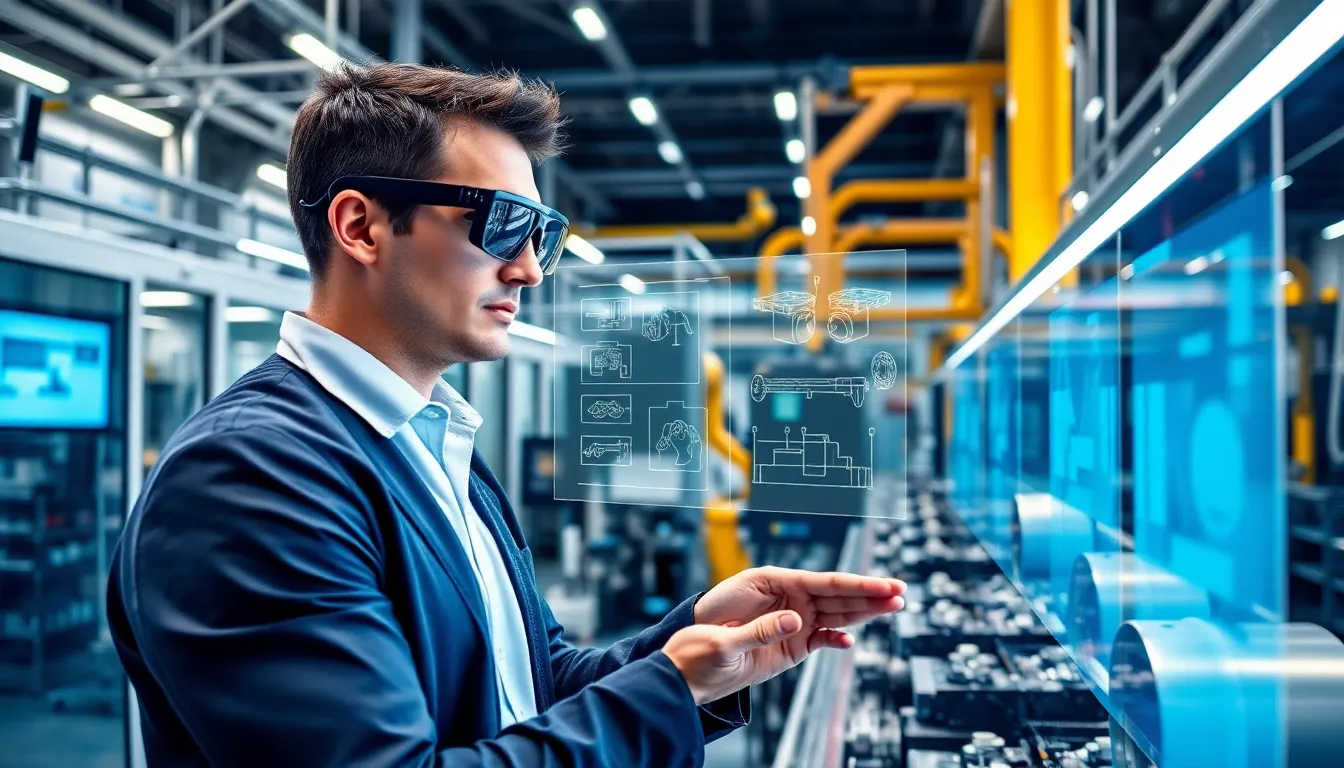
Imagine a world where complex industrial tasks are executed with the precision of a surgeon while being visually guided by digital overlays. Welcome to the realm of industrial augmented reality (AR), where innovation meets practicality in the most fascinating ways. This powerful technology is transforming how industries operate, and while it sounds like something out of a sci-fi film, it’s very real, minus the flying cars. Join us on this journey as we explore the intricacies, marvels, and challenges of industrial augmented reality. Trust us: by the end, you’ll wonder how we ever functioned without it.
Understanding Industrial Augmented Reality
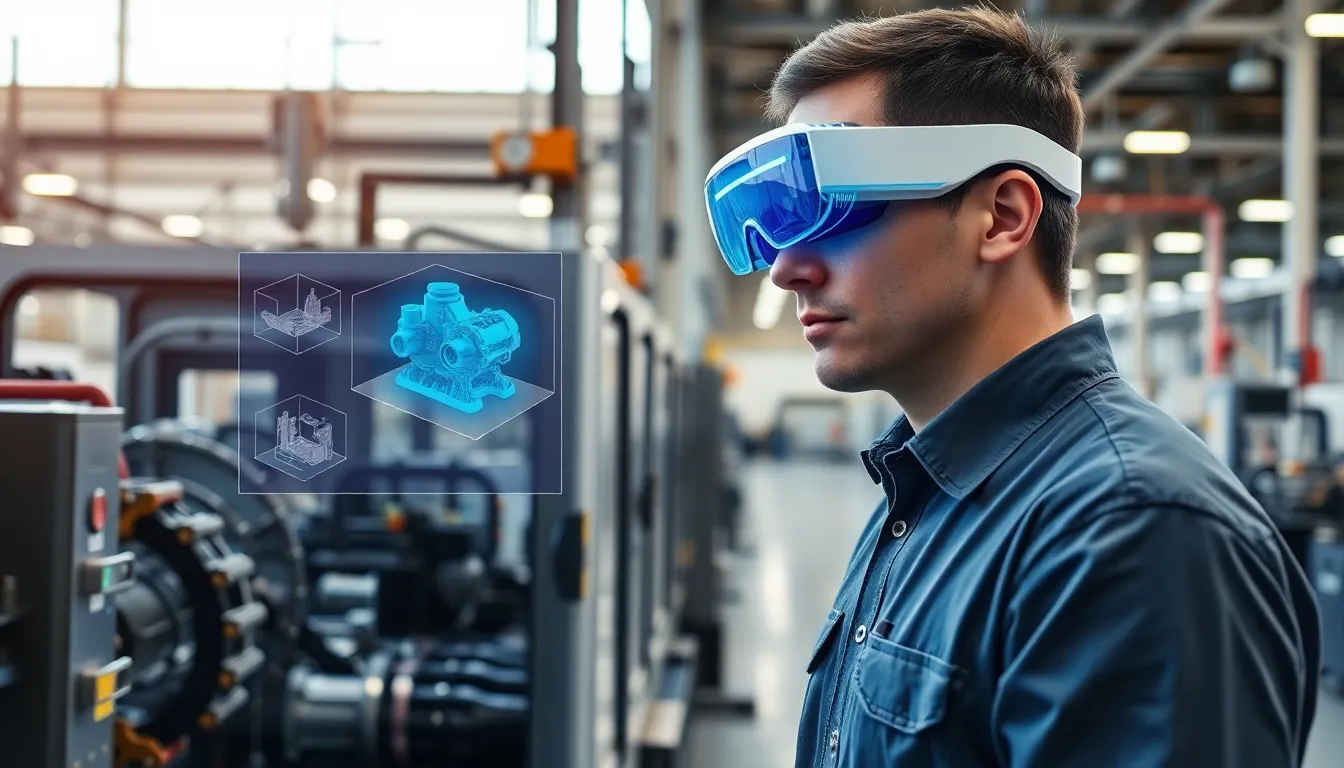
Industrial augmented reality seamlessly integrates digital information into the physical world, enhancing the user’s perception and interaction with their surroundings. At its core, AR overlays digital content, like images, videos, or 3D models, on real-world environments in real-time. Businesses across various sectors, from manufacturing to healthcare, leverage this technology to improve safety, efficiency, and overall productivity.
Take a moment to think about how many steps and considerations go into everyday tasks. Imagine a technician working on a complex assembly line. With AR, they can see detailed instructions projected directly on the machinery, eliminating confusion and reducing errors. This unique blend of digital enhancements and hands-on work is what makes industrial AR such a game changer.
Key Technologies Behind Augmented Reality
Several key technologies underpin the backbone of augmented reality. Computer vision is one of the most crucial components. By capturing and analyzing visual data from the environment, AR systems recognize objects and track their movements. This recognition allows digital overlays to be precisely aligned with real-world objects.
Sensors play a vital role as well. Devices equipped with sensors gather information about surroundings, helping to improve the accuracy of AR experiences as they help create a more immersive environment. Also, hardware like head-mounted displays (HMDs) or smart glasses offers users a direct interface with augmented realities, making large-scale implementation more practical.
Finally, software frameworks tailor-made for AR development are essential. These frameworks help the creation of AR applications, transforming abstract ideas into interactive experiences that companies can use.
Applications of Augmented Reality in Industry
The applications of augmented reality in industry are almost endless. In manufacturing, AR can guide workers through assembly processes, showcasing complex procedures step by step to increase accuracy. For example, companies like Boeing employ AR in assembling aircraft parts, which substantially reduces assembly time.
In maintenance and repair, technicians can visualize components that would otherwise be difficult to access. By donning AR goggles, they can project schematics or 3D models directly onto the equipment needing repair.
Beyond manufacturing, AR finds its place in logistics. Warehouses use AR to streamline inventory management, where employees don smart glasses to receive real-time data on stock levels, reducing search times dramatically. In healthcare, AR assists medical professionals during surgeries by overlaying critical patient data in their line of sight, guiding them through intricate procedures with unprecedented accuracy.
Benefits of Industrial Augmented Reality
The benefits of industrial augmented reality are profound and multifaceted. First and foremost, AR enhances training and onboarding. New employees can engage with interactive training modules that make complex concepts easy to grasp.
Efficiency is another significant advantage. By providing real-time, context-specific information, AR minimizes the chances of errors, resulting in improved workflow. Companies report reduced downtime and maintenance costs due to the precise information AR provides to technicians, enabling quicker repairs.
Also, augmented reality fosters collaboration. Teams can visualize projects together, regardless of their physical locations, making remote collaboration seamless and effective. This capability becomes even more valuable as companies increasingly embrace flexible work environments.
Challenges and Limitations
Even though all the advantages, industrial augmented reality is not without its challenges. One major hurdle is the integration of AR systems into existing workflows. Businesses often find it difficult to make the leap from traditional practices to cutting-edge solutions, potentially leading to resistance from staff.
Technical limitations also exist. High-quality AR experiences require powerful hardware, which can be costly. Not every company possesses the budget to invest in high-end devices necessary for optimal performance. Besides, staying updated with software advancements and maintaining the systems can lead to additional expenses.
User experience is another aspect to consider. AR applications can become overwhelmingly complex if not designed intuitively, alienating users rather than enhancing their experiences. Businesses must emphasize usability to make AR accessible to everyone involved.
Future Trends in Industrial Augmented Reality
As industries evolve, so too does the landscape of augmented reality. One notable trend is the ongoing convergence of AR and artificial intelligence (AI). Integrating AI can enhance AR’s ability to provide context-aware information, allowing systems to learn and adapt based on user behavior.
Also, the focus on mobile and cloud AR solutions is increasing. With the accessibility of smartphones and tablets, the potential for AR applications to reach a broader user base is on the rise. Mobile AR can democratize access to industrial AR, enabling even small businesses to benefit from this transformative technology.
Also, advancements in hardware technology will only make AR experiences more immersive and realistic. As devices become lighter, more powerful, and affordable, industries will likely see an uptick in AR adoption, pushing the boundaries of what’s possible.