
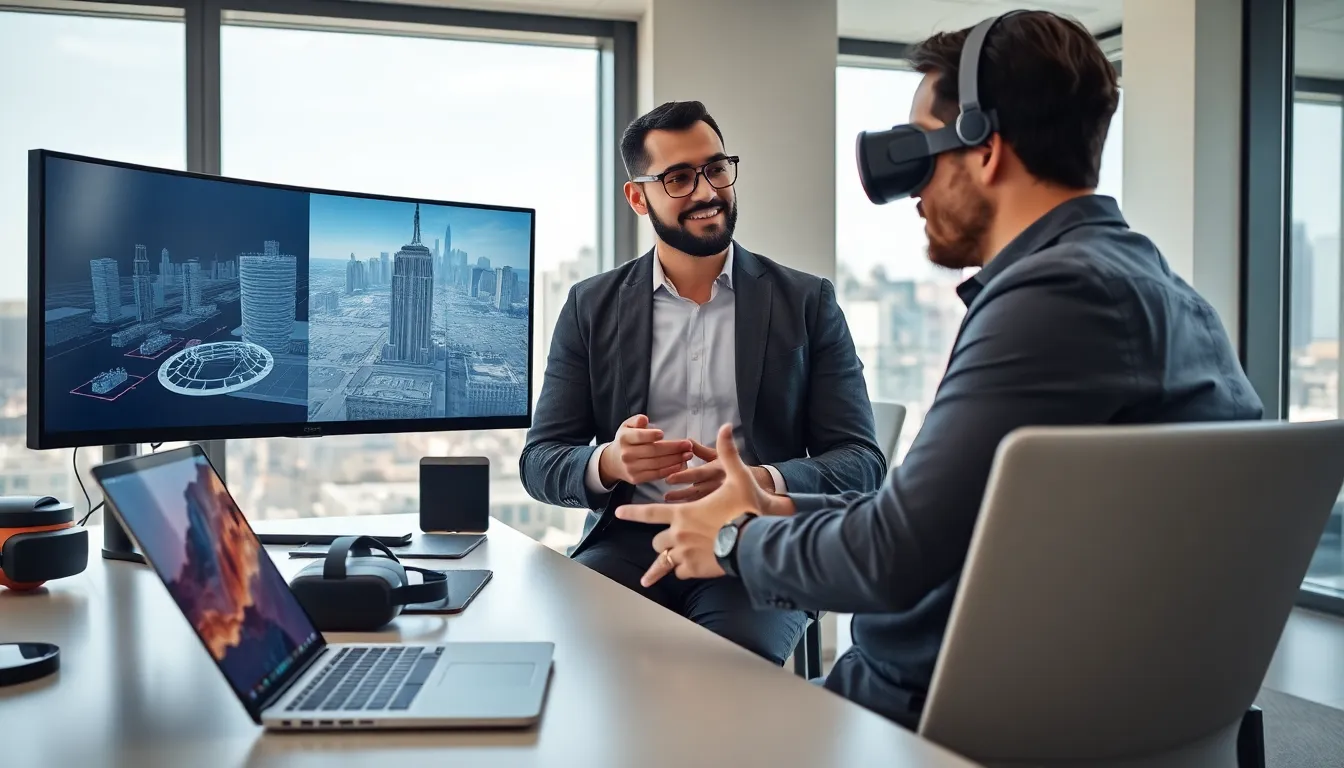
Picture this: you’re at a coffee shop, and instead of scrolling through your phone, you’re interacting with a virtual barista who takes your order in a whimsical accent. Sounds fun, right? This is what augmented reality (AR) brings to the table, or in this case, the cafe. As the technology evolves, augmented reality app developers are becoming the unsung heroes of our digital landscape. Let’s jump into the world of AR and uncover what makes these developers so vital in creating immersive experiences that bridge reality and the digital realm.
Understanding Augmented Reality Technology

Augmented reality overlays digital information onto the real world, enhancing user experiences. Unlike virtual reality, which transports users into a completely virtual world, AR blends the digital with the physical. Imagine looking through your smartphone camera and seeing virtual elements like furniture in your living room or characters from a game leap into your backyard.
The core technology behind AR involves computer vision, simultaneous localization and mapping (SLAM), depth tracking, and even sensor-fusion techniques. These tools allow devices to understand their environment and accurately place digital objects within it. This interplay between digital and real sets the stage for countless applications across various industries.
Types of Augmented Reality Applications
Augmented reality applications can be categorized into several distinct types, each serving unique purposes.
Marker-Based AR
This type utilizes visual markers (like QR codes) to trigger the display of the virtual content. When the camera recognizes a designated marker, it overlays graphics or animations. It’s often used in marketing campaigns to provide a richer customer experience.
Markerless AR
Markerless AR doesn’t rely on specific markers. It uses GPS, compass, accelerometer, and other sensors to position virtual content. Applications in this space frequently enhance navigation, allow for location-based games, or provide educational experiences through interactive maps.
Projection-Based AR
In projection-based AR, light is projected onto the physical environment to create interactive displays. This approach can be seen in exhibitions or presentations, where digital content is projected directly onto surfaces, enhancing engagement.
Superimposition-Based AR
Superimposition AR replaces or augments a view of an object with a digital version. This kind of application is especially useful in industries like healthcare, where surgeons can overlay patient data onto the operating field without obstructing their vision.
Skills Required for Augmented Reality App Development
The realm of augmented reality requires an eclectic set of skills to create captivating applications. Here are a few key competencies that aspiring AR developers should acquire:
Proficiency in Programming Languages
Developers need to be adept in languages such as C#, C++, and JavaScript. Familiarity with Unity or Unreal Engine is also crucial since many AR applications are built within these environments.
Understanding of 3D Modeling
A solid grasp of 3D modeling techniques allows developers to create assets that look wonderful in augmented reality. Tools like Blender or Autodesk Maya can help this process.
Knowledge of Machine Learning
Incorporating machine learning algorithms enhances AR applications, allowing them to recognize patterns and improve user interactions. This cutting-edge knowledge is becoming increasingly essential in the field.
UX/UI Design Skills
Creating intuitive user experiences is pivotal. Understanding user interface and experience principles ensures that interactions feel smooth and are enjoyable for users.
Choosing the Right Tools and Frameworks
Selecting the proper tools and frameworks is vital for successful AR app development. Developers have several options at their disposal:
AR Development Platforms
Frameworks such as ARKit (for iOS) and ARCore (for Android) provide robust support for building AR applications. These platforms simplify the integration of AR features while ensuring optimal performance.
Game Engines
Unity and Unreal Engine remain the two leading game engines for AR development. They offer rich libraries and tools that help the creation of immersive AR experiences.
3D Modeling Software
As mentioned, platforms like Blender, Maya, and Cinema 4D are essential for creating the visual elements that populate augmented environments. Plus, integration of textures, animations, and special effects can make a significant difference in a project’s quality.
Key Challenges in Augmented Reality Development
Even though the exciting potential of AR technology, developers face several hurdles:
Technical Complexities
Developing seamless interactions can be complex due to varying hardware capabilities and environments. Ensuring a consistent experience across devices is a significant challenge.
User Acceptance
Getting users to embrace new technology isn’t always easy. Many consumers still need to understand the benefits AR can provide. Developers must create compelling use cases to illustrate its value.
Privacy Concerns
As AR applications often require access to sensitive data, including location services and camera feeds, ensuring user privacy and trust is paramount. Developers have to carry out robust security measures to alleviate users’ concerns.
Future Trends in Augmented Reality Development
The future of augmented reality is brimming with potential. Here are a few trends that are expected to shape AR development in the coming years:
Enhanced Integration with AI
As artificial intelligence continues to evolve, its integration into AR apps will enhance personalization and user experience, allowing for more intuitive applications.
Advancements in Hardware
With developments in smart glasses and wearable technology, augmented reality will become more accessible and practical for everyday use. This advancement promises to propel AR adoption in various fields from retail to education.
Greater Use in Social Media
Platforms are beginning to incorporate AR features that enhance user engagement. Expect to see AR filters and effects become commonplace in social media, creating interactive experiences that resonate with users.