
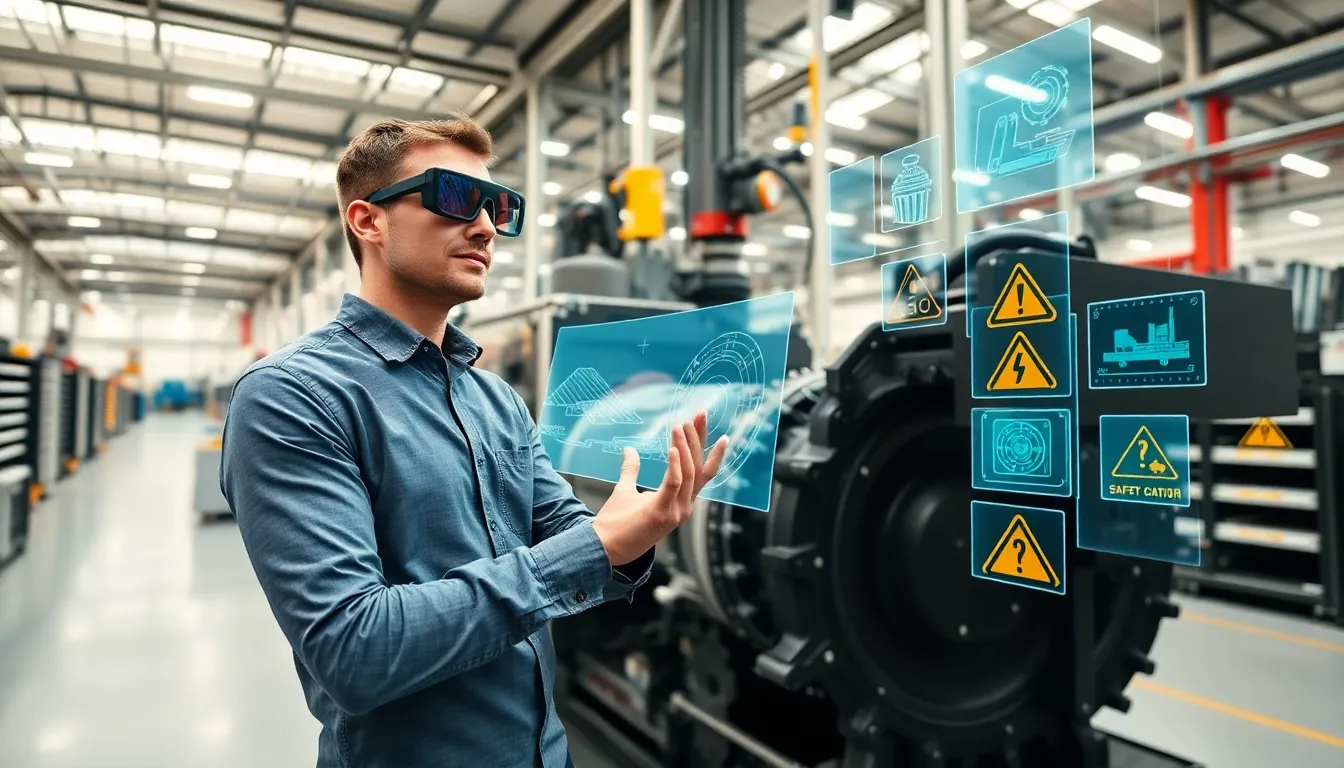
Imagine doing your job while a digital assistant hovers beside you, pointing out things like a savvy friend with expert knowledge. That’s the beauty of augmented reality (AR) in manufacturing. It’s not just a buzzword, it’s a game changer that reshapes how industries operate. In a world where efficiency meets innovation, let’s jump into how AR technologies are revolutionizing the manufacturing landscape.
Understanding Augmented Reality Technology
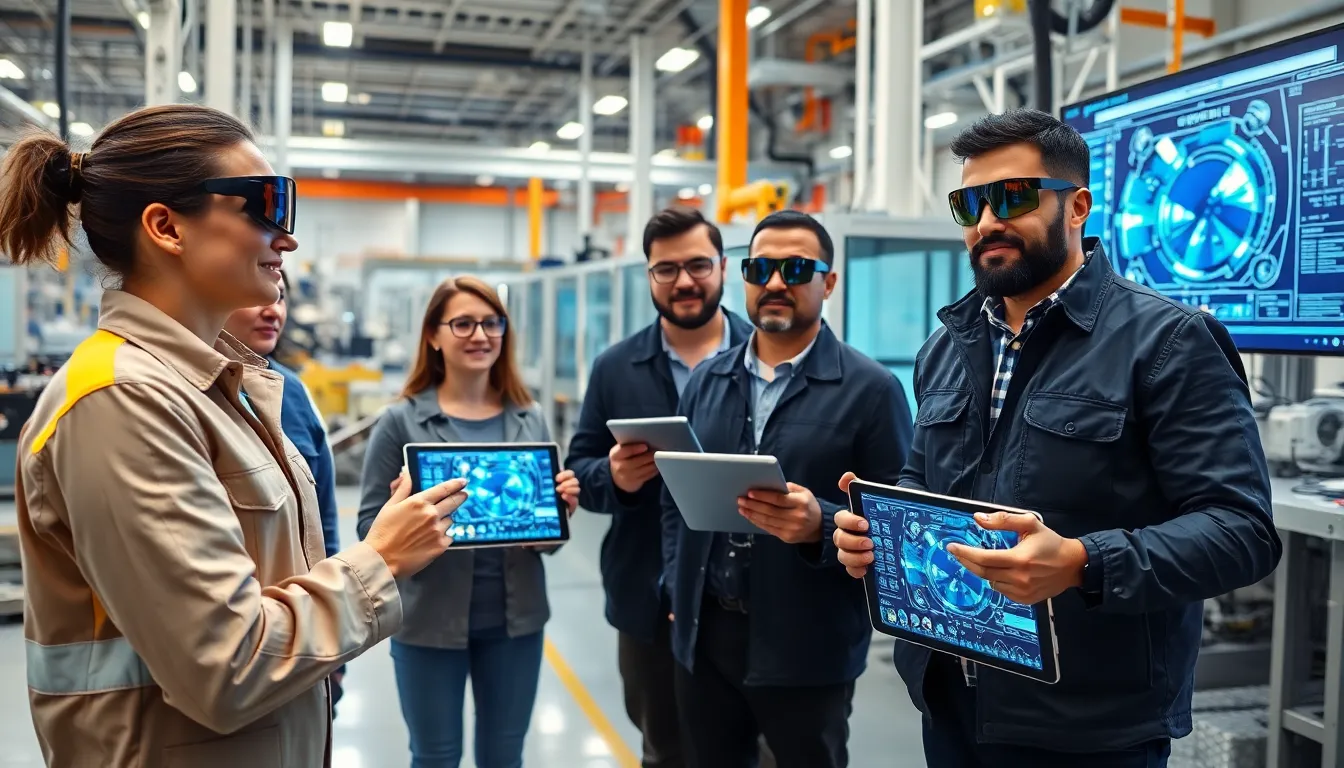
At its core, augmented reality is the blending of digital information with the real world. Instead of completely immersing oneself in a digital environment like virtual reality does, AR overlays digital elements onto live views of the environment. This can happen through various devices like smartphones, tablets, and specialized AR glasses. Imagine looking at a real machine while seeing real-time data analyzed in your field of view. The technology harnesses a combination of hardware and software, using sensors, cameras, and displays to enhance perception and interaction with the physical world.
To put it simply, AR enriches real-world environments by adding contextual information. In the manufacturing arena, this means workers can visualize processes and instructions directly in their workspace without needing to consult manuals repeatedly.
Benefits of Augmented Reality in Manufacturing
The benefits of AR in manufacturing stretch far beyond just being a cool gadget. First and foremost, it significantly boosts productivity. Employees equipped with AR tools can complete assembly tasks faster by referencing digital instructions right on the equipment they’re working on. This feature cuts down on errors typically caused by referring to paper diagrams.
Also, enhanced training becomes another hallmark of the technology. New employees can learn faster by engaging with AR systems that simulate real-world operations. Visual aids can display assembly instructions or safety hazards, allowing workers to practice without the risk of damaging valuable equipment or compromising safety.
Cost savings also can’t be ignored. With AR, companies can reduce downtime during training and maintenance by providing immediate, interactive guidance. Overall, augmented reality not only streamlines existing processes but also opens the door for creative problem-solving.
Applications of Augmented Reality in Manufacturing
The applications of augmented reality in the manufacturing sector are diverse and remarkable. For starters, AR can assist during assembly processes, where workers can access step-by-step assembly instructions displayed over the machinery they are operating. This real-time guidance can eliminate confusion and mistakes.
In maintenance and repair, AR proves invaluable by displaying diagnostic information on the relevant machinery components. Technicians can see what needs attention without needing extensive downtime to inspect equipment physically. Imagine a technician seeing rotating gear systems highlighted with important data overlaid while making adjustments. This use of AR not only enhances repair efficiency but also fosters a deeper understanding of the machinery.
Quality assurance is yet another realm benefiting from AR. Manufacturing environments can use augmented reality to check compliance with industry standards by overlaying guidelines while assessing products. If something doesn’t comply, it becomes glaringly obvious and addressable immediately.
Implementing Augmented Reality Solutions
Bringing augmented reality solutions into a manufacturing plant isn’t merely about basing the technology on flashy displays. Companies must take a structured approach to effectively carry out AR. It begins with identifying specific use cases that can maximize AR’s strengths. For instance, understanding whether to enhance training, maintenance, or processes directly influences decisions about the necessary technology.
Collaborating with AR solution providers can lead to more customized applications. Each manufacturing environment is different: so, tailoring solutions to fit specific workflows, machinery, or employee skill levels is crucial. Engineers work alongside software developers to create meaningful AR experiences rather than generic apps that fail to achieve desired outcomes.
It’s also essential to ensure that employees feel comfortable using these new tools. Offering ample training, engaging them in the transition process, and gathering feedback can ease the adoption process.
Challenges and Considerations
While the allure of augmented reality in manufacturing is compelling, challenges abound. One major hurdle is the initial investment. Integrating AR into existing systems can require significant funds for both software and hardware. Companies must assess whether the long-term benefits justify the upfront costs.
Another consideration is the technical complexity involved. Employees may need time to adapt to new technologies, which could initially cause productivity dips. Ensuring a seamless transition is not just about technological adoption: it requires an understanding of the human side of change management.
Finally, data security looms large as a pressing concern. With AR systems accessing and processing sensitive data, manufacturers must carry out robust cybersecurity measures to protect proprietary information from breaches.
The Future of Augmented Reality in Manufacturing
Looking ahead, the future of augmented reality in manufacturing shines brightly. As technology continues to evolve, so will its applications. We can anticipate much more intuitive user interfaces, perhaps even integrating AI-driven systems that can learn from user behavior, suggesting ways to improve processes dynamically.
Besides, as 5G technology proliferates, the potential for real-time data access will expand dramatically. This means that augmented reality systems will be able to handle more complex data sets without lag, making interactive displays even richer. Envision factories where real-time collaboration occurs statewide, with engineers and operators communicating seamlessly via AR systems.
The possibilities seem endless, positioning augmented reality not just as a passing trend but as a fundamental shift in how manufacturing operates.